

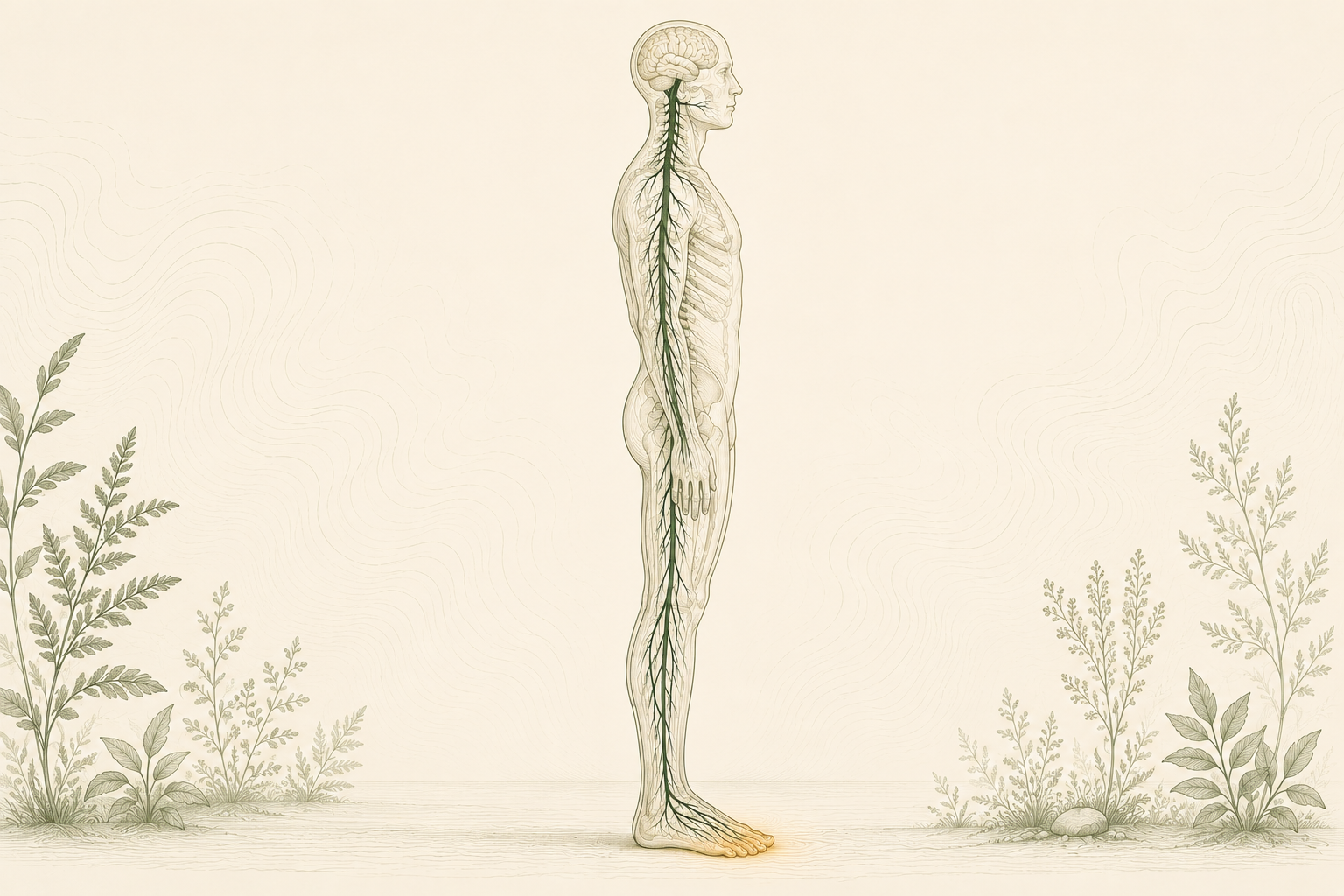
Neuropathy in the feet causes burning, tingling, and numbness, and it's not always linked to diabetes. This guide covers every major cause, how symptoms progress by stage, how doctors diagnose it, and treatment options that address the root issue rather than just the discomfort.
If your feet have started feeling like they belong to someone else, you're not imagining it. Maybe it's a tingling that won't quit, a burning sensation that shows up at night, or numbness that makes you double-check you actually stepped on something. That disconnect between what your feet are doing and what they're telling your brain has a name: neuropathy.
Neuropathy means nerve damage or nerve dysfunction. It's not a single disease. It's a description of what's happening to the nerves themselves, and it can come from dozens of different underlying causes. The feet are often ground zero because the nerves that run down to your toes are the longest in your body, and long nerves are the first to show wear when something is going wrong.
The symptoms tend to follow a familiar pattern: numbness, tingling, burning, unusual sensitivity to touch, weakness in the foot muscles, and a sense of being less steady on your feet than you used to be. Diabetes is the cause most people have heard of, and it is the most common one, but it is far from the only one. Vitamin deficiencies, autoimmune conditions, certain medications, and even something as specific as a nerve getting compressed at the ankle can all produce the same burning, tingling feet.
This guide walks through what neuropathy actually is, why it shows up in the feet first, the full range of causes, how doctors diagnose it, what treatment looks like, and which footwear features genuinely help people living with nerve-related foot symptoms. No fear-mongering, no oversimplifying. Just a clear picture of what's going on and what you can do about it.
Neuropathy in the feet is damage or dysfunction of the peripheral nerves that causes symptoms such as numbness, tingling, burning, pain, weakness, or loss of sensation. Diabetes is the most common cause, but vitamin deficiencies, autoimmune diseases, medications, and nerve compression can also contribute.
Peripheral neuropathy is far more widespread than most people realize:
These numbers are part of why neuropathy deserves more attention than it typically gets. It's common, often manageable, and easy to miss in its earliest stages.
Your nervous system has two main divisions. The central nervous system is your brain and spinal cord. Everything else, the vast network of nerves running out to your skin, muscles, and organs, is your peripheral nervous system. Neuropathy is damage or dysfunction somewhere in that peripheral network, which is why doctors often call it peripheral neuropathy.
Peripheral nerves come in three types, and most people with neuropathy have some mix of all three affected:
Think of a healthy nerve like a clean phone line. A signal goes in one end (say, your foot touching a cold floor) and comes out the other end as clear information your brain can use ("that's cold"). Nerve damage is like static on that line. Sometimes the signal gets garbled, so cold feels like burning. Sometimes it gets amplified, so a light touch feels painful. And sometimes the line goes dead altogether, so you don't feel the floor at all.
That static, amplification, and silence are exactly what produces the three hallmark categories of neuropathy symptoms: the wrong sensation, too much sensation, or no sensation.

Neuropathy in the feet most commonly feels like:
Symptoms typically start in the toes and the balls of the feet and move upward over time. They're often symmetrical, meaning both feet are affected at roughly the same time and in similar ways.
Diabetic neuropathy is the most common form of peripheral neuropathy, and it develops when consistently elevated blood sugar damages the small blood vessels that supply the nerves. Without adequate blood flow, nerves lose function over time. According to the American Diabetes Association, nearly half of people with diabetes will develop some form of neuropathy during their lifetime, and the feet are typically affected before any other part of the body. Tight blood sugar management is the single biggest factor in slowing this process down.
Nerves depend on specific nutrients to maintain their protective coating and function properly. A few deficiencies show up again and again in neuropathy cases:
The Cleveland Clinic notes that nutritional neuropathy is often reversible once the underlying deficiency is corrected, which makes it one of the more encouraging causes to identify early.
Chronic, heavy alcohol use can damage peripheral nerves directly, a condition sometimes called alcoholic neuropathy. It also frequently leads to the nutritional deficiencies described above, since heavy drinking interferes with how the body absorbs B vitamins. The two mechanisms often work together.
Several autoimmune diseases cause the immune system to mistakenly attack nerve tissue. The most common include:
In these cases, neuropathy is one symptom within a broader autoimmune picture, and treating the underlying condition is usually central to managing the nerve symptoms.
Sometimes the issue isn't damage along the whole nerve but pressure on it at one specific point. Two common examples:
Compression-related neuropathy is notable because it's often localized to one foot rather than both, which can help distinguish it from more systemic causes.
Certain medications list peripheral neuropathy as a known side effect. Chemotherapy drugs are among the most well documented, but some antibiotics, anti-seizure medications, and other drug classes can also affect nerve function. If neuropathy symptoms start after beginning a new medication, that timing is worth mentioning to a doctor.
A handful of infections are associated with nerve damage, including:
In a meaningful percentage of cases, thorough testing doesn't turn up a clear cause. This is called idiopathic neuropathy. It doesn't mean nothing is wrong, only that current testing hasn't identified a specific trigger. Management still focuses on symptom relief and monitoring for changes.
SymptomWhat It May Feel LikeBurning feetHeat, burning, or raw sensations, often worse at nightNumbnessReduced feeling or sensation, like wearing a thick sockTinglingPins and needles, sometimes described as fizzingSharp painElectric, shooting, or stabbing sensationsHypersensitivityEven light touch, like a sheet, feels painfulWeaknessReduced control over foot or toe movementBalance problemsFeeling unstable while walking, especially in low light
Neuropathy symptoms usually progress gradually rather than appearing overnight. Many people first notice tingling or numbness in the toes that's easy to dismiss. Over months or years, the sensation can spread to cover more of the foot and sometimes move up toward the ankle and lower leg. Pain and numbness frequently coexist, which can feel contradictory but is a well recognized pattern: damaged nerves can simultaneously create false pain signals and fail to register real sensation.
Neuropathy doesn't show up the same way for everyone, but it tends to move through recognizable stages as nerve involvement increases. Knowing where your symptoms fall can help you describe them more clearly to a doctor.
This is the stage where symptoms are easiest to dismiss as tired feet or a long day on your feet. It's also the best time to get evaluated, since early causes like vitamin deficiencies tend to respond well to treatment.
Symptoms don't always move through these stages at the same pace, and not everyone progresses to the advanced stage. The point of staging isn't to predict the future. It's to help you and your doctor track whether a treatment plan is working.
This is one of the most common questions people have once they understand neuropathy is a nerve problem, not strictly a foot problem. The answer comes down to anatomy.
The nerves that run from your spinal cord down to your toes are the longest nerves in your entire body, often three feet or more in adults. Many causes of neuropathy, especially diabetes and nutritional deficiencies, damage nerves in a length-dependent pattern. That means the longest nerve fibers are affected first simply because there's more nerve to maintain and more distance for blood flow and nutrients to travel.
This is why symptoms classically begin in the toes, spread to the rest of the foot, and only later involve the hands and fingers, which are connected to comparatively shorter nerves. Clinicians sometimes describe this pattern as "stocking and glove," referring to the way numbness eventually maps onto the parts of the body covered by socks and gloves.
Yes, and this is one of the more underappreciated effects of nerve damage in the feet. Balance depends heavily on proprioception, which is your body's ability to sense where your feet are in space without looking at them. That sense relies entirely on the same sensory nerves that neuropathy affects.
A few mechanisms drive this:
This is part of why footwear with a stable platform matters so much for people with neuropathy. When the foot itself can't fully sense the ground, the shoe needs to compensate by providing a more predictable, stable base.
Burning, tingling, and foot pain show up in several conditions, and it's easy to mix them up. This table breaks down the key differences.
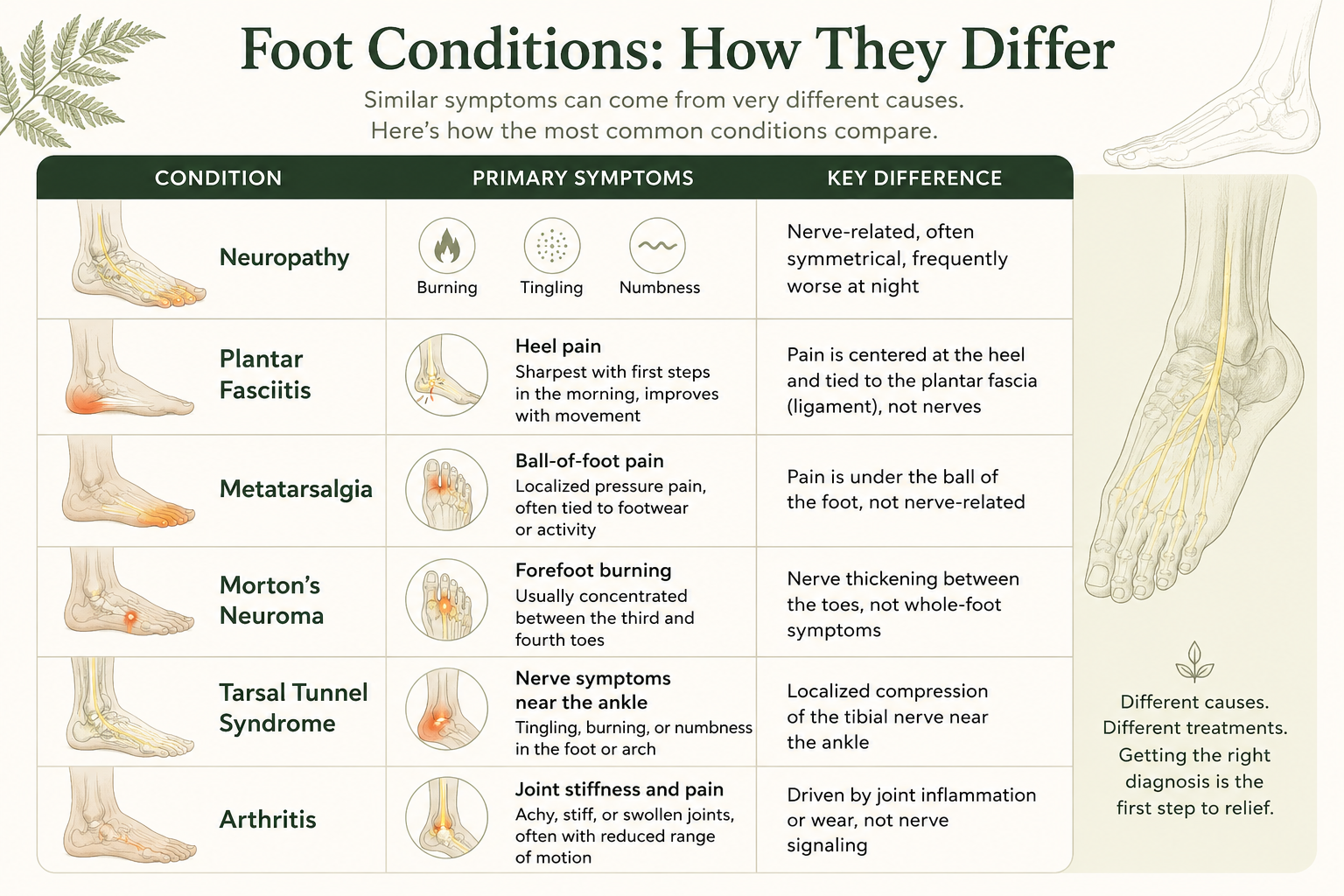
Primary Symptoms: Burning, tingling, numbness
Key Difference: Neuropathy is caused by nerve dysfunction and often affects both feet at the same time. Symptoms frequently worsen at night and may include burning sensations, pins-and-needles, or loss of sensation.
Primary Symptoms: Heel pain
Key Difference: Plantar fasciitis typically causes sharp pain under the heel that is worst during the first few steps in the morning and often improves once the foot warms up.
Primary Symptoms: Ball-of-foot pain
Key Difference: Metatarsalgia causes localized pain beneath the forefoot and is commonly associated with repetitive pressure, high-impact activities, or footwear that overloads the metatarsal heads.
Primary Symptoms: Forefoot burning, tingling between the toes
Key Difference: Morton's neuroma usually affects the area between the third and fourth toes and may feel like standing on a pebble or having a fold in your sock.
Primary Symptoms: Tingling, burning, or numbness near the ankle and arch
Key Difference: Tarsal tunnel syndrome occurs when the tibial nerve becomes compressed near the ankle, creating nerve symptoms that are often more localized than generalized peripheral neuropathy.
Primary Symptoms: Joint stiffness, aching, and pain
Key Difference: Arthritis is driven by joint inflammation or joint degeneration rather than nerve dysfunction. Symptoms often include stiffness, swelling, and reduced range of motion.
If you're trying to sort out heel pain specifically, our plantar fasciitis guide breaks down that condition in more depth, including how its first-step pain pattern differs from the nerve-related symptoms described here.
There isn't one single test that diagnoses neuropathy. Doctors typically build a picture using several tools together:
According to the Mayo Clinic, the combination of history, exam, and targeted bloodwork identifies an underlying cause in the majority of neuropathy cases, which is why a thorough initial workup matters even when it feels like a lot of testing.
Whenever possible, treatment starts with the root issue rather than just the symptoms. That might mean:
Addressing the cause doesn't always reverse existing nerve damage, but it frequently slows progression and can improve symptoms over time, particularly with nutritional and medication-related causes.
A physical therapist can help with gait training, balance work, and exercises specifically designed for people with reduced sensation in their feet. This matters because neuropathy changes how you walk even when you don't notice it happening, and those changes can lead to secondary issues elsewhere in the legs and back.
Movement remains one of the most consistently recommended tools for managing neuropathy symptoms, particularly for diabetic neuropathy. Helpful forms include:
Several categories of medication are commonly used to manage neuropathy-related pain, including certain anti-seizure medications and antidepressants that have separately demonstrated nerve pain relief, as well as topical treatments. The right choice depends heavily on the underlying cause, other health conditions, and side effect tolerance, which is why this is a conversation to have directly with a physician rather than something to self-manage.
When sensation is reduced, your feet lose one of their main early warning systems. That makes protective habits especially important:
Footwear cannot reverse nerve damage. What the right shoe can do is reduce friction, pressure, and irritation on feet that are already more vulnerable, and that translates directly into day-to-day comfort.
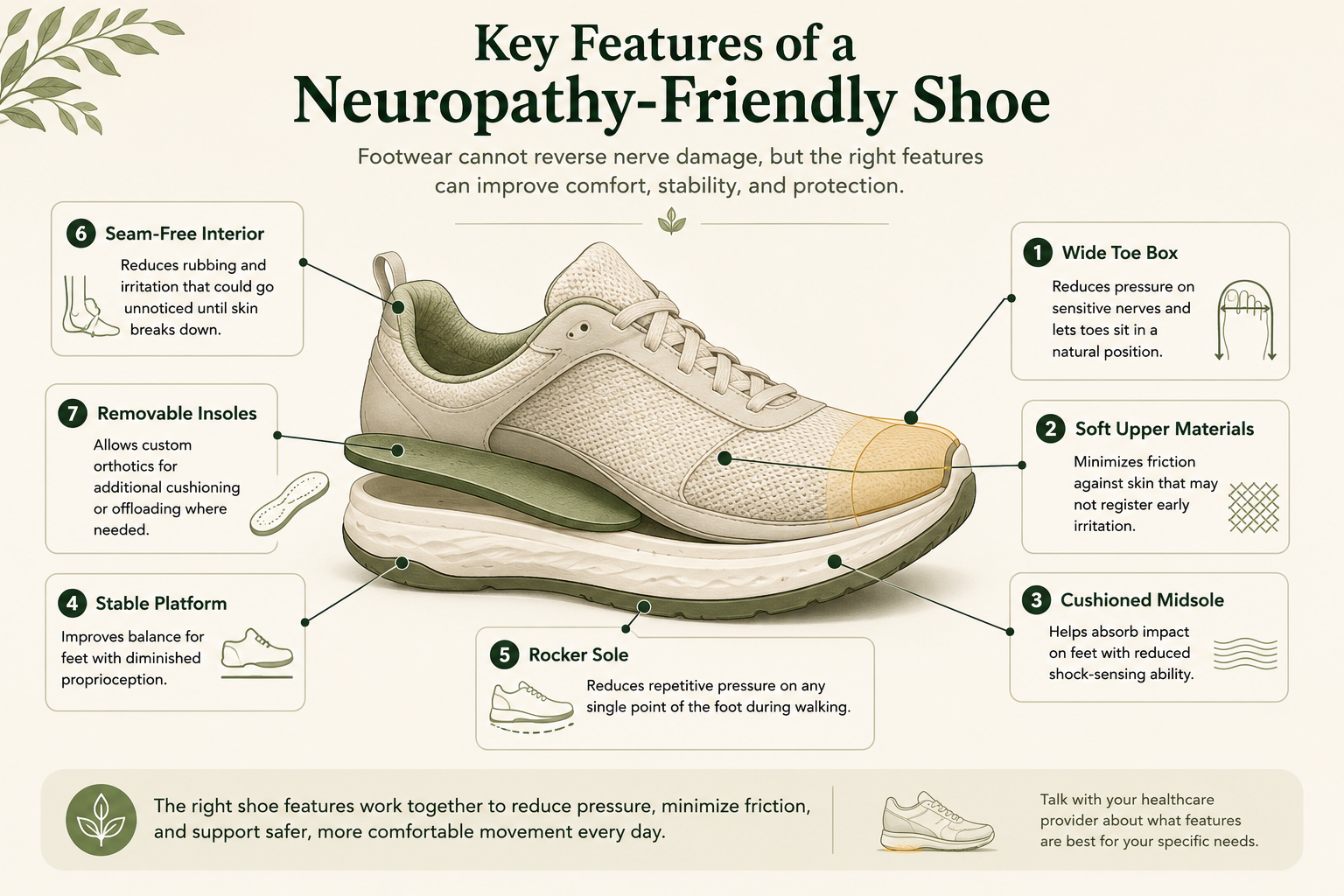
Why It Helps: A wider toe box reduces pressure on sensitive nerves and allows the toes to spread naturally rather than being compressed together.
Why It Helps: Soft, flexible uppers minimize friction against skin that may not detect irritation early due to reduced sensation.
Why It Helps: Additional cushioning helps absorb impact forces during walking and reduces repetitive stress on sensitive areas of the foot.
Why It Helps: A stable base improves balance and walking confidence, particularly for people experiencing numbness or reduced proprioception.
Why It Helps: A rocker-shaped sole helps guide the foot through each step and reduces pressure on any single area of the foot.
Why It Helps: Fewer internal seams mean fewer pressure points and less friction, reducing the risk of irritation or skin breakdown.
Why It Helps: Removable insoles allow for custom orthotics, additional cushioning, or pressure-relief inserts when needed.
Just as some features help, others actively work against comfort and safety for feet with reduced sensation.
Why to Avoid: Narrow shoes can compress the forefoot and increase pressure on already sensitive nerves, often making burning, tingling, and numbness feel worse.
Why to Avoid: Shoes with very little cushioning transmit more impact into the feet. For people with neuropathy, this can increase discomfort and place additional stress on areas that may already have reduced sensation.
Why to Avoid: Internal stitching and seams can create friction and pressure points. Because neuropathy may reduce your ability to feel irritation early, these areas can become problematic before you realize there's an issue.
Why to Avoid: Sandals with minimal support can make balance more challenging and increase the risk of slips, trips, and falls. This is especially important for people experiencing numbness or reduced proprioception.
As a general rule, anything that compresses the foot, transmits more impact, or requires extra balance to wear safely is worth avoiding when nerve sensation is reduced.
If you're shopping with these features in mind, our upcoming Best Shoes for Neuropathy roundup goes deeper on specific models built around this exact list. In the meantime, our guide on wide toe box shoes is a useful next stop, since toe box width is one of the highest-impact features for neuropathy comfort and overlaps heavily with what flat feet sufferers need too, covered in our flat feet guide.
Most neuropathy symptoms develop gradually, but certain changes deserve a prompt call to a doctor rather than a wait-and-see approach:
These signs don't automatically mean something serious, but they're worth evaluating rather than monitoring on your own, especially for anyone with diabetes or reduced foot sensation.
Sometimes. Neuropathy caused by a vitamin deficiency or certain medications can improve significantly once the underlying cause is corrected. Neuropathy from long-term diabetes or other chronic conditions is less likely to fully reverse, but treatment can still slow progression and meaningfully reduce symptoms.
No. Diabetes is the most common cause, but vitamin deficiencies, autoimmune conditions, alcohol use, certain medications, infections, and nerve compression can all cause the same symptoms.
Several factors converge at night: there are fewer distractions to compete with nerve signals, body temperature changes can intensify sensation, and lying down shifts blood flow patterns in the legs. Many people with neuropathy report their symptoms are noticeably worse after dark.
Yes, in most cases. Walking supports circulation and blood sugar regulation, both of which play a role in nerve health. The exception is active foot wounds or significant balance issues, where a doctor may recommend modified activity until those are addressed.
Shoes with a wide toe box, soft seam-free interiors, cushioned midsoles, and a stable platform tend to work best. These features reduce friction and pressure on feet with reduced sensation without requiring the foot to compensate for instability.
It depends entirely on the cause. Nutritional and some medication-related neuropathies often improve substantially once treated. Neuropathy linked to long-term diabetes or certain chronic conditions is more likely to be permanent, though symptoms can still be managed effectively.
❌ Myth: Only people with diabetes develop neuropathy.
✅ Fact: Diabetes is the most common cause, but vitamin deficiencies, autoimmune conditions, medications, alcohol use, infections, and nerve compression can also lead to neuropathy.
❌ Myth: Numbness is harmless if it doesn't hurt.
✅ Fact: Loss of sensation increases the risk of cuts, burns, pressure injuries, and balance problems.
❌ Myth: Neuropathy only affects older adults.
✅ Fact: Neuropathy can occur at any age depending on the underlying cause.
❌ Myth: Shoes can cure neuropathy.
✅ Fact: Proper footwear cannot reverse nerve damage, but it can improve comfort, stability, and protection.
❌ Myth: Burning feet automatically mean neuropathy.
✅ Fact: Burning sensations can also result from conditions such as tarsal tunnel syndrome, athlete's foot, circulation problems, or other foot disorders.
Medical Disclaimer: This article is for educational purposes only and is not a substitute for professional medical advice, diagnosis, or treatment. Always consult a qualified healthcare provider regarding any foot pain, numbness, or other symptoms you are experiencing.